SEOZilla is an AI SEO platform designed to automate and scale search-engine optimization for agencies and businesses. The SEOZilla ecosystem includes autonomous AI agents for content creation, WhiteLabelSEO.ai for agencies needing a complete white label SEO solution, and SEOContentWriters.ai for Human+AI content production. Together, these tools generate optimized content, streamline keyword workflows, and support high-quality editorial output. SEOZilla helps agencies keep clients in-house, increase efficiency, and deliver stronger organic results. With AI-powered automation and expert SEO content writers, the ecosystem provides a scalable, future-ready approach to modern SEO.
Surfer SEO Review 2026: Is It Still Worth It?
|
TLDR; Surfer SEO remains a top-tier on-page optimization tool in 2026, with its Content Editor showing a 0.28 correlation with Google rankings across 1 million SERP entries. The platform's standout addition is the AI Tracker, which monitors brand visibility across ChatGPT, Perplexity, and Gemini—addressing a gap traditional SEO tools haven't filled. Pricing ranges from $79/month (Essential) to $419/month (Enterprise), with users typically seeing 2-3 position ranking improvements within 30 days. However, Surfer isn't a complete SEO solution; you'll still need separate tools for keyword research, backlink analysis, and technical auditing, making it best suited as the content optimization layer in a broader SEO stack. If you've been looking for the right on-page SEO tool to strengthen your content strategy, Surfer SEO has likely crossed your radar multiple times. It's held a prominent position in the SEO community for years now. But with AI search engines evolving rapidly and Google algorithms in constant flux, one question keeps surfacing: is Surfer SEO worth it in 2026? For those wondering whether is Surfer SEO worth it for long-term growth, this review aims to provide clarity based on real data. For most content-focused marketers and SEO professionals, the answer is yes, though some caveats apply (and we'll address those shortly). Surfer has committed heavily to AI search optimization this year, introducing features designed to help you rank not only on Google, but also across AI-powered search engines like ChatGPT, Perplexity, and Gemini. This represents arguably their most significant strategic shift to date, and it's what often sets Surfer apart from traditional SEO tools that haven't caught up with these changes. This thorough review breaks down the core features, pricing structures, and real-world performance data you need for a proper evaluation of Surfer. You'll find detailed coverage of what the tools actually accomplish within your workflow, along with analysis of whether the pricing structure makes sense for solo practitioners compared to larger teams. Real-world performance data gets its own dedicated section, since that's ultimately what determines value. The honest limitations that marketing materials tend to skip also get full treatment. Whether you're a digital marketer at an agency, a content manager at a mid-sized business, or an SEO specialist seeking scalable solutions, this guide should give you what you need to make an informed decision. What Makes Surfer SEO Stand Out in 2026 — Is Surfer SEO Worth It?The Content Editor has always been Surfer SEO's flagship feature, a real-time optimization tool scoring your content from 0 to 100. What makes the 2026 version particularly compelling is the research backing it up. Surfer analyzed 1 million SERP entries across 10,000 queries and found their Content Score shows a 0.28 Spearman correlation with Google rankings. That number might seem modest until you consider context: backlinks demonstrated only a 0.17 correlation in similar studies. In practical terms, optimizing content based on Surfer's recommendations often represents one of the more reliable levers available for improving search visibility, no small thing given how competitive organic search has become. Beyond the Content Editor, the SERP Analyzer examines over 500 on-page ranking signals from top competitors, word count, heading structure, keyword density, creating a data-driven blueprint specific to your niche. The keyword research tools tend to surface useful opportunities, while content audit capabilities help identify existing pages worth improving. Where does implementation actually happen? The Google Docs integration works smoothly for drafting, and the WordPress connection handles publishing without friction. For teams already using Jasper AI, that integration saves copying and pasting between tools. Those exploring how AI SEO automation helps with faster rankings will find Surfer represents one established approach within a growing ecosystem of AI-powered solutions. Additionally, teams can learn more about scaling AI optimization through AI Content Strategy Frameworks for Scalable SEO Growth 2025, which complements Surfer’s approach perfectly. New AI Features That Change the GameThe biggest evolution in Surfer SEO for 2026 isn't just about ranking on Google anymore. It's about visibility across the entire AI search landscape. Surfer has introduced several new features that address this shift directly. The AI Tracker stands out as probably the most innovative addition. It monitors where your brand appears across ChatGPT, Perplexity, and Gemini, showing which of your pages AI search engines actually cite. Traditional rank tracking tools simply weren't built to capture this data, which makes the AI Tracker particularly valuable for teams trying to understand their presence in conversational search. According to Surfer's 2025 Unwrapped Report, users saw an average uplift of 423% in combined organic and AI visibility (Source). Other notable features include:
Content teams scaling production often find these tools deliver real time savings, sometimes hours per article. Surfer reports that users generated 1.4 million articles across 106 languages in the past 12 months, optimizing 305 million entities in the process. For organizations developing an AI content strategy framework, understanding how these tools fit into existing workflows has become increasingly important. Those production numbers show just how widely adoption has spread. Pricing Breakdown: What You'll Actually Pay — Is Surfer SEO Worth It for the Cost?Pricing often ends up being the deciding factor, and there's good reason for that. Surfer SEO offers four main tiers in 2026, with annual billing providing meaningful discounts. The Essential plan starts at $99/month (or $79/month billed annually) and includes 30 Content Editor articles and 5 AI-generated articles monthly. This tier works well for freelancers or small teams just getting started with on-page optimization. At $219/month ($175/month annually), the Scale plan provides 100 Content Editor articles, suiting agencies or businesses with consistent content needs. One thing worth noting: this tier doesn't include AI article generation, so you'll need to handle the writing yourself or bring in writers. The Scale AI plan at $299/month ($239/month annually) combines volume with AI capabilities, offering 100 Content Editor articles plus 30 AI-generated articles. Mid-sized businesses and agencies tend to land here most often, since the balance of features and cost fits well with that segment's typical workflow. Enterprise pricing starts around $419/month with custom configurations and unlimited Content Editor access. TechRadar's analysis notes that enterprise clients typically negotiate based on specific needs and volume requirements (Source). Surfer uses a credit-based system that deserves attention from heavy users. Publishing dozens of articles weekly means those credits accumulate quickly, sometimes outpacing initial estimates. Teams tracking SEO performance metrics and KPIs will want to factor in tool costs per article when calculating true ROI, since this expense can significantly shift the numbers. For practical examples of measuring ROI, check out Measuring SEO Performance: Essential Metrics and KPIs for 2026, which connects directly with evaluating whether is Surfer SEO worth it. Real Results: What Users Are Actually SeeingTheory's nice. But what matters is whether Surfer SEO delivers real results. Based on multiple case studies and user testimonials, the answer appears to be yes, though realistic expectations are essential. EntreResource's review found that users typically see ranking improvements of 2-3 positions within 30 days of optimization. That might not sound dramatic at first glance. Consider this, though: moving from position 8 to position 5 can double your click-through rate, which is probably the metric you actually care about anyway. One particularly compelling case study involves Talkersi, an e-learning company that used Surfer's Content Editor and Audit tools to generate SEO traffic with an ad equivalent value of 136,400 PLN per month. What made their approach work? They gamified Content Score targets for writers, essentially turning optimization into a competitive game for their content team. This drove consistent improvements across their entire site and achieved visibility in both traditional Google results and AI search engines. The interesting takeaway here is how they transformed optimization from another box to check into something writers genuinely wanted to engage with. A California law firm took a different route, using Auto-Optimize to refresh dozens of existing articles. Within 90 days, they had reclaimed top rankings and gained visibility in Google's AI Overviews and ChatGPT responses. These examples point to something important: Surfer tends to work best as a systematic approach to content optimization rather than a magic bullet. Consistency across your content library usually matters more than any single optimization you'll make. How Surfer Compares to AlternativesUnderstanding where Surfer fits in the competitive market helps you figure out whether it's actually right for your needs, no tool exists in isolation, after all. When comparing Surfer SEO vs Ahrefs, the distinction becomes pretty clear: Surfer excels at on-page content optimization, while Ahrefs tends to dominate in keyword research and backlink analysis. Neither tool replaces the other, they're serving entirely different purposes. Clearscope and MarketMuse are probably Surfer's closest competitors in the content optimization space. Both offer enterprise-level NLP analysis and content grading. But here's the thing: they come with significantly higher price tags. They also lack Surfer's AI content generation capabilities or the AI search tracking features that have become increasingly valuable for modern SEO teams. For teams already using full SEO suites like Ahrefs or Semrush, Surfer works as a complementary tool focused specifically on content optimization. Before exploring on-page SEO tools for your stack, consider what gaps you're actually trying to fill, content scoring, NLP recommendations, or AI-assisted drafting. Whether those gaps justify adding another subscription to your workflow is worth thinking through carefully, because tool fatigue is real. A team running ten subscriptions might benefit more from consolidation than from adding Surfer, while a content-heavy operation with basic SEO coverage could find it fills a genuine need. Limitations You Should Know AboutSurfer SEO has clear strengths, but it also has gaps worth understanding before committing. Surfer's keyword research capabilities are fairly limited compared to dedicated tools like Ahrefs or Semrush. Keyword discovery and competitive analysis are central to many workflows. If these functions matter to your process, you'll likely need additional tools to fill that gap. There's no backlink analysis or technical SEO auditing built into the platform. Surfer focuses exclusively on content, so it won't help identify broken links, crawl errors, or backlink opportunities that might be affecting rankings. The AI-generated content has improved with the Humanizer feature, but it still requires human editing before publishing, every single time. Relying entirely on Surfer AI without careful review often results in content that feels generic or misses brand voice entirely. Some helpful approaches to AI-driven personalization techniques can bridge this gap. Then there's the risk of over-optimization. The gamified Content Score can actually push writers toward keyword stuffing or chasing arbitrary metrics rather than writing genuinely helpful content. Best results usually come from treating Surfer's recommendations as guidelines, not rigid rules to follow at all costs. Frequently Asked QuestionsIs Surfer SEO good for beginners?Yes, it probably is. Surfer SEO features a fairly intuitive interface that beginners can navigate from the start. The Content Editor provides clear, actionable recommendations, keyword suggestions, structure tips, and similar guidance, that you can apply immediately without needing deep technical SEO expertise. Most users find they're optimizing content within minutes of signing up, which tends to be quicker than many expect. Can Surfer SEO replace Ahrefs or Semrush?No, it can't. Surfer SEO serves a completely different purpose. It excels at on-page content optimization, but that's essentially where its capabilities end. The keyword research depth available in Ahrefs or Semrush simply isn't there. The same applies to backlink analysis, technical SEO auditing, and competitor tracking features, capabilities that most serious SEO practitioners would consider essential. For this reason, most professionals use Surfer alongside one of these tools rather than as a replacement. How accurate is Surfer's AI content generation?Surfer AI produces solid first drafts that typically score well in the Content Editor right away. The content still requires human review and editing, which shouldn't come as a surprise. Their Humanizer feature helps make AI-generated text read more naturally, and it's genuinely useful for that purpose. Before publishing anything, though, you'll want to add your unique insights, examples drawn from your own experience, and your distinct brand voice. Does Surfer SEO help with AI search visibility?Yes, and this is arguably one of Surfer's key differentiators in 2026. The AI Tracker monitors your brand's visibility across ChatGPT, Perplexity, Gemini, and Claude. It shows you which pages AI search engines actually cite when they're responding to queries (which is pretty valuable intel, honestly). This feature helps you optimize for the changing search environment where traditional Google rankings are, in most cases, only part of the picture now. Is the Essential plan enough for small businesses?For small businesses publishing fewer than 30 articles per month, the Essential plan at $79/month (annual billing) likely provides sufficient capacity. It works well as a solid starting point for most smaller operations. However, if AI content generation is needed or higher volume is anticipated, upgrading to Scale or Scale AI plans becomes necessary, which makes it worth considering your growth trajectory before committing to a plan. Making Your Decision — Is Surfer SEO Worth It Overall?So, is Surfer SEO worth it in 2026? For content-focused marketers, SEO specialists, agencies prioritizing organic growth, and in-house teams managing multiple sites, the answer is a confident yes. The platform's Content Editor remains best-in-class, and it has actually improved noticeably over the past year. The AI search tracking features address a genuine gap in the market, and the pricing tends to deliver measurable ROI for teams that use it consistently, though the investment is substantial. Surfer isn't a complete SEO solution, however. You'll still need separate tools for keyword research, backlink analysis, and technical site auditing. The platform works best as the content optimization layer in your SEO stack rather than a standalone solution handling everything from strategy to execution. What workflow does your team currently use? Starting with Surfer's 7-day money-back guarantee offers a low-risk way to test whether the tool fits smoothly with your existing processes. Teams seeking additional automation in their content creation often find that platforms like SEOZilla provide complementary capabilities, auto-publishing and brand voice adaptation, for instance, that work effectively alongside optimization tools. Surfer SEO has evolved thoughtfully to address the realities of 2026's search environment. Whether it delivers value depends largely on matching the tool to the right use case. For those who fit the profile, content-heavy operations focused on organic growth, the investment typically pays for itself. |
SEOZilla
SEOZilla is an AI SEO platform designed to automate and scale search-engine optimization for agencies and businesses. The SEOZilla ecosystem includes autonomous AI agents for content creation, WhiteLabelSEO.ai for agencies needing a complete white label SEO solution, and SEOContentWriters.ai for Human+AI content production. Together, these tools generate optimized content, streamline keyword workflows, and support high-quality editorial output. SEOZilla helps agencies keep clients in-house, increase efficiency, and deliver stronger organic results. With AI-powered automation and expert SEO content writers, the ecosystem provides a scalable, future-ready approach to modern SEO.
The AI content detection arms race is heating up. As more businesses adopt AI-powered content creation, detection tools have become increasingly sophisticated, and frankly also paranoid. We spent the past few days running an analysis of our content through multiple detection platforms, testing different AI models, and measuring exactly how effective our humanisation pipeline really is. We plan to do a lot more of this. The results surprised us. Here’s the full breakdown. The Problem Every AI...
AI content is everywhere now. Most marketers use it in some form, even if they don’t always say it out loud, it’s usually an open secret. At the same time, tools like the Ahrefs AI Detector are getting sharper and often more confident in their decisions, flagging patterns faster than before (and sometimes a bit too fast, honestly). That mix puts real pressure on teams that need to move quickly. Tight deadlines. Big growth goals. It also brings up worries about staying safe in search results...
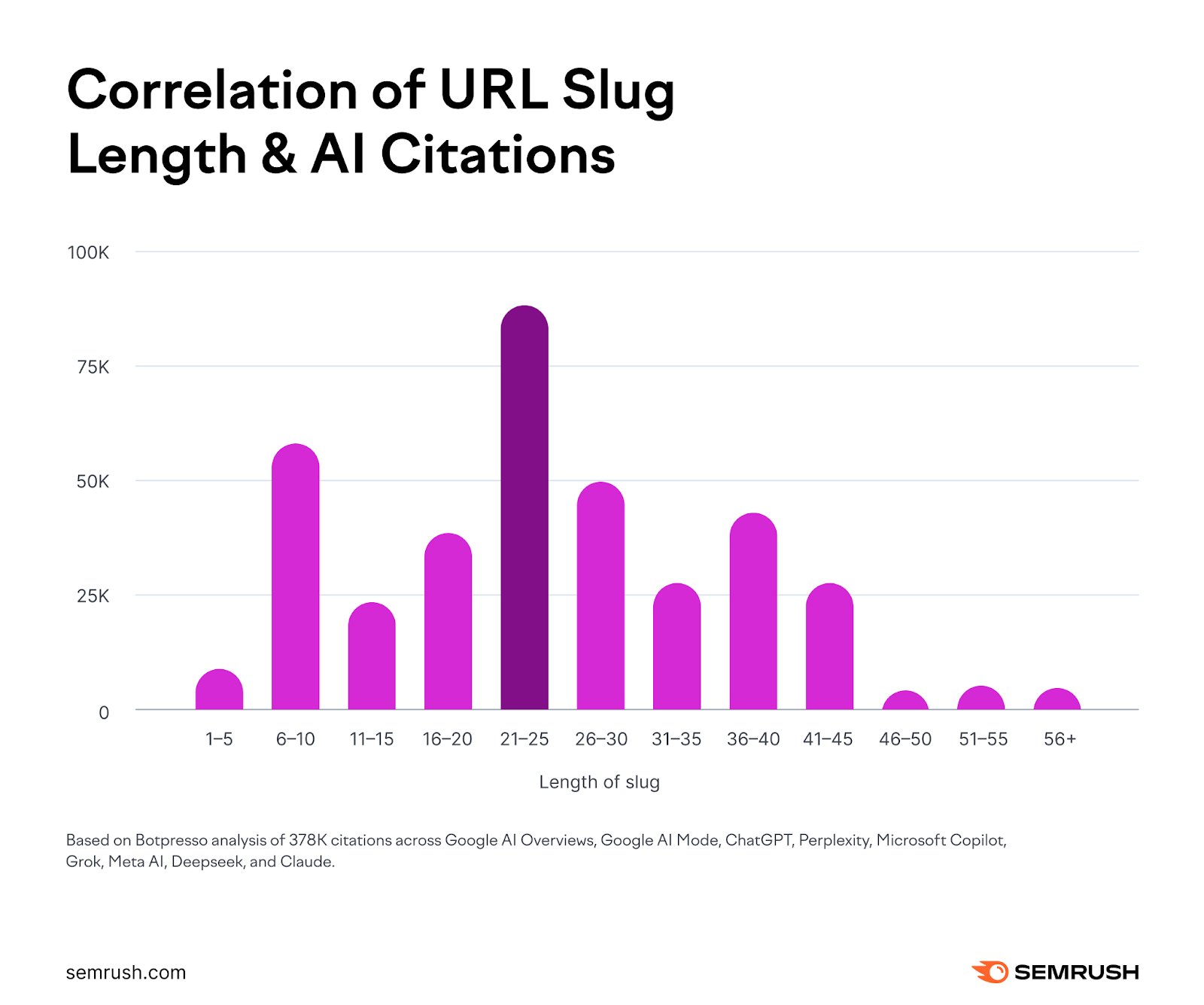
From an automation perspective, slug length affects how your CMS saves and displays AI-created links. The best approach is for your AI tool to follow solid SEO habits: choose the most relevant words, keep the brand’s tone, and cut any extra bits that push keywords out of view. This small technical tweak can help boost visibility and make sharing smoother. The Optimal Length of Blog Slug for AI If you’re trying to figure out the “sweet spot,” most SEO experts suggest slugs in the 2, 3 word...